News
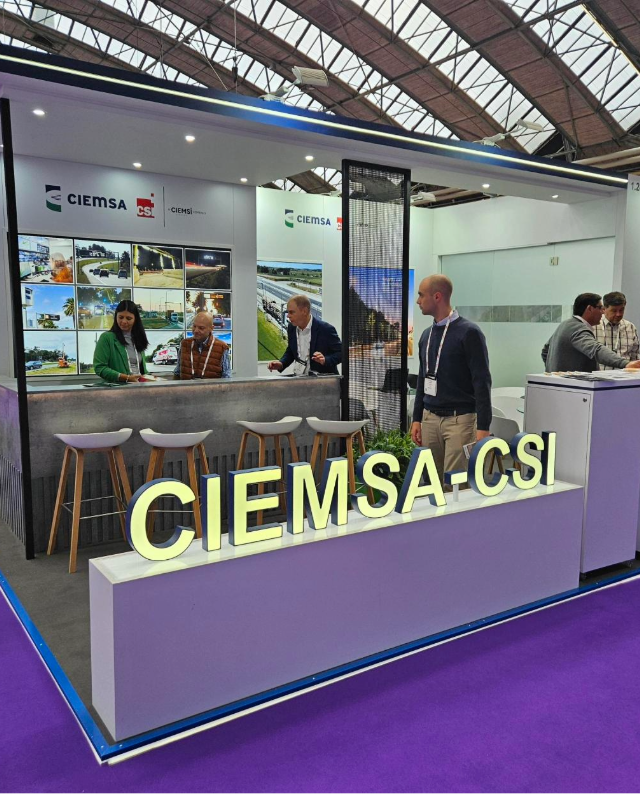
Our participation in Intertraffic 2026 was a key opportunity to position ourselves on a leading global stage in mobility and transportation. It allowed us to compare our solutions with international trends, forge ties with strategic partners, and validate our approach in highly demanding contexts. It was also an important platform for showcasing Latin American expertise in settings where European and Asian developments predominate.
At our booth, we present a comprehensive approach to mobility projects. Rather than showcasing isolated solutions, we aim to demonstrate how our work philosophy enables us to develop systems that address each client’s actual needs by integrating cutting-edge technologies and concepts. In particular, we highlight our capabilities in comprehensive road traffic surveys and in systems for the evaluation and management of transportation infrastructure.
Trends That Are Transforming Mobility
Globally, we are seeing the consolidation of trends that have been gaining momentum in recent years. Among these, the digitization of mobility systems, the intensive use of big data, and the incorporation of artificial intelligence to optimize transportation operations stand out.
In this context, intelligent transportation systems have come to play a structural role. They are no longer isolated tools, but rather integrated platforms that enable real-time monitoring, control, and optimization. These systems are key not only to improving operations, but also to advancing broader goals such as road safety and emissions reduction.
What Sets Us Apart as a Team
Our main strength lies in our ability to combine technical knowledge with a deep understanding of the local context. We have a solid foundation in transportation engineering, but we complement that expertise with a contextual approach that allows us to understand how cities function, what their limitations are, and which solutions are truly feasible.
In addition, we operate independently of any specific technology, which gives us the flexibility needed to tailor each project to the specific needs of each client and each environment.
In our projects, we integrate different layers of information. We combine data—ranging from traditional surveys to big data sources—with models and simulation tools, along with a precise understanding of the terrain. This allows us to develop solutions that are not only technically robust but also practical and effective in the real world.
Impact on Cities
Our goal is to contribute to more efficient, accessible, and equitable mobility systems. We seek to reduce travel times, improve access to opportunities, and, at the same time, minimize environmental impacts.
Ultimately, we work to make cities better places for people to live, by promoting more sustainable and better-connected environments.
Looking Ahead
Looking ahead to the coming years, we believe that urban mobility in Latin America will evolve toward a gradual adoption of digital technologies and data-driven management systems, although at different paces depending on each city. Electrification will also advance, but at varying rates across the region.
In this context, the main challenges are not solely technological; they are also related to institutional frameworks, financing, and implementation capabilities.
However, we have also identified significant opportunities. Today, we have tools that allow us to make significant improvements without requiring large investments, especially when we harness the potential of data. Furthermore, there is a clear opportunity to innovate with solutions tailored to the specific characteristics of Latin America, rather than replicating models developed in other contexts.